 ;
;
 ;
;
 ;
;
 ;
;
 ;
;
 ;
;


Dominion Energy
January 25, 2026
The site navigation utilizes arrow, enter, escape, and space bar key commands. Left and right arrows move across top level links and expand / close menus in sub levels. Up and Down arrows will open main level menus and toggle through sub tier links. Enter and space open menus and escape closes them as well. Tab will move on to the next part of the site rather than go through menu items.

Damage Assessments and Restoration Work Underway
January 25, 2026
10:30 a.m. ET
Winter Storm Fern continues to track east across the United States, bringing freezing rain, heavy snowfall, and dangerous travel conditions. As of 10:30 a.m. ET, more than 800,000 electricity customers were without power as a result of Fern.*
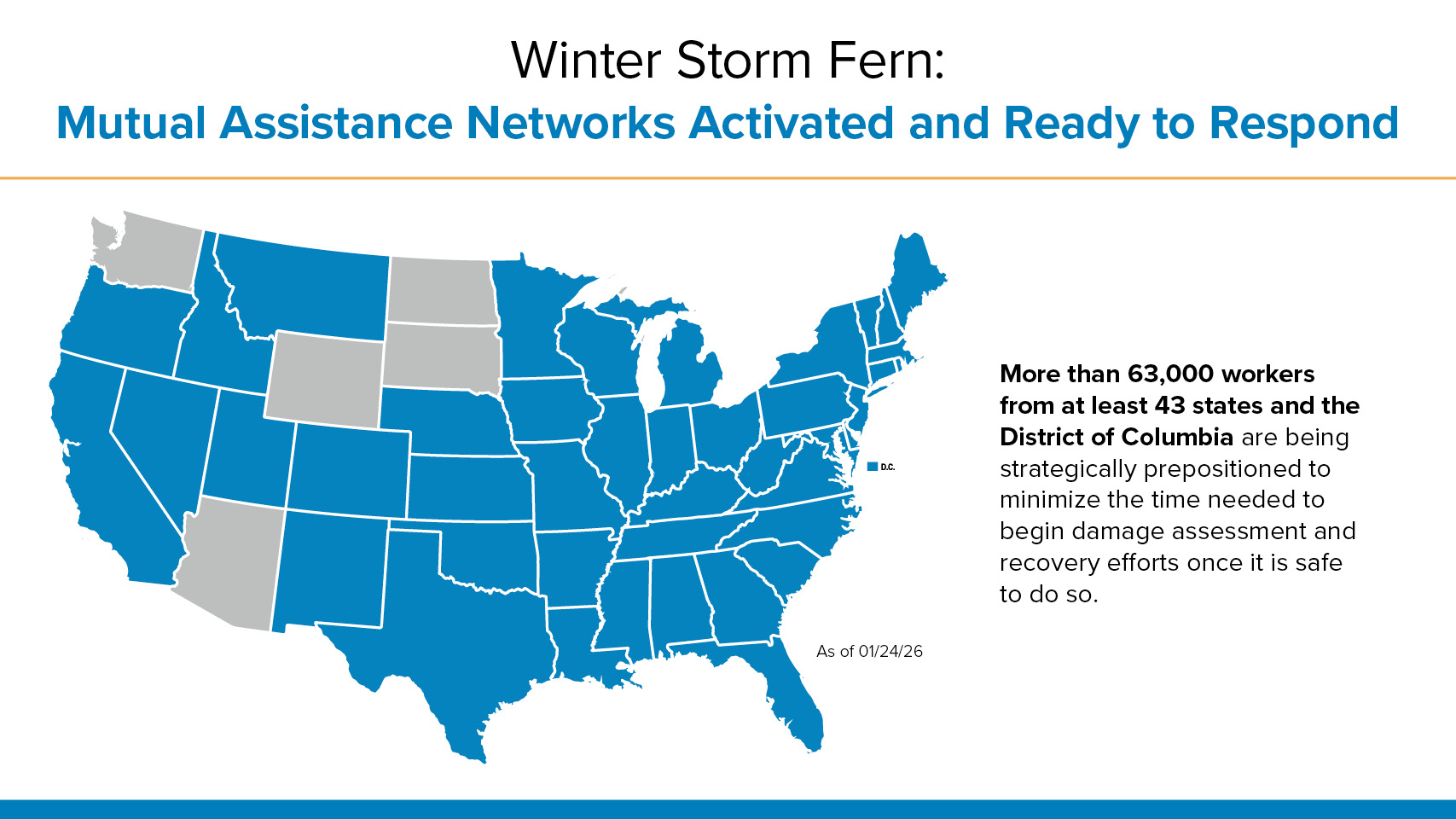
More than 63,000 mutual assistance workers from at least 43 states are dedicated to the Fern response and restoration effort. Damage assessments and restoration work already are underway in areas where it is safe to do so.
The CEO-led Electricity Subsector Coordinating Council is engaged to ensure unity of effort at the highest levels of government and across all segments of the industry, including investor-owned electric companies, electric cooperatives, and public power utilities.
Customer and Crew Safety Comes First
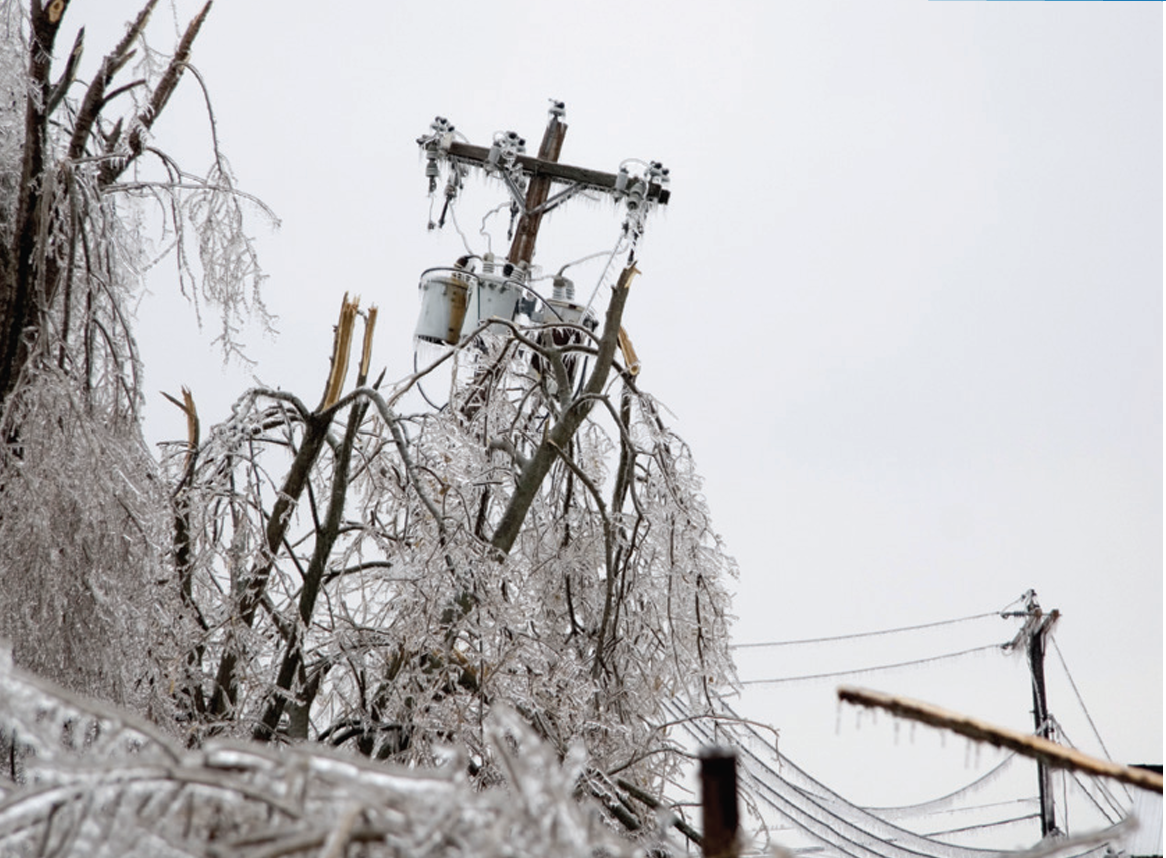
Winter storms can present unique challenges to crews working to assess damage and restore power. Ice accumulation and thaw-and-freeze temperature cycles can cause new damage to trees and branches. Our thoughts are with those who were or are being impacted by Fern and with those who are in the storm’s path.
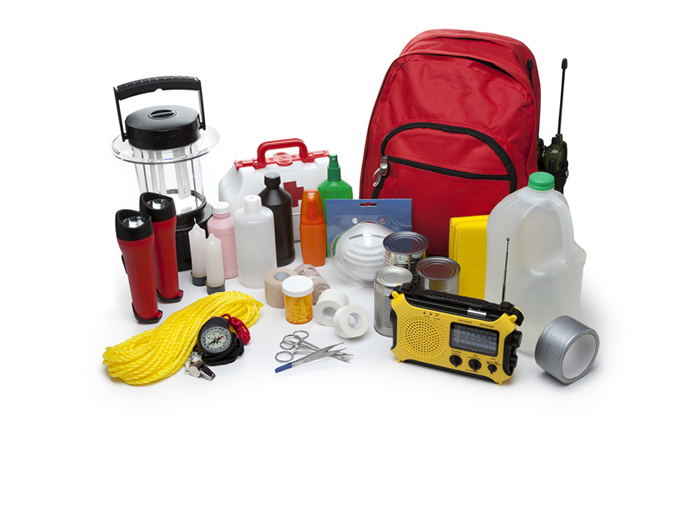
Customers affected by the winter storm are reminded to:
*It is important to remember that outages measure customer meters impacted, not the number of individuals without power. Due to the nature of the storm, customers may have experienced more than one outage.
Every electric company has a detailed plan for restoring power after storms. Typically, one of the first steps is to make sure that power is no longer flowing through downed lines. Restoration then proceeds based on established priorities. Below are the steps to restore power after a storm. Learn More.





January 25, 2026
January 25, 2026
January 25, 2026
January 25, 2026
January 25, 2026
January 25, 2026
January 25, 2026
January 25, 2026
January 25, 2026
January 25, 2026
January 24, 2026
January 24, 2026
January 24, 2026
January 24, 2026
January 24, 2026
January 24, 2026
January 24, 2026
January 24, 2026
January 24, 2026
January 24, 2026
January 24, 2026
January 24, 2026
January 24, 2026
January 24, 2026
January 23, 2026
January 23, 2026
January 23, 2026
January 23, 2026
January 23, 2026
January 23, 2026
January 23, 2026
January 23, 2026
January 23, 2026
January 23, 2026
January 23, 2026
January 23, 2026
January 22, 2026
January 22, 2026
January 22, 2026
January 22, 2026
January 22, 2026
January 22, 2026